Why Every Girl Needs to Watch Nana

By Alexia Cretoiu
January 30, 2026

There are stories you enjoy, stories you admire, and then there are stories that quietly rewire how you understand yourself. Nana belongs to that last category. It isn’t just an anime you watch, it’s one you grow up with, return to, and reinterpret as life reshapes you. If you are in your late teens, twenties, or even looking back on them, Nana feels less like fiction and more like meeting versions of yourself you haven’t fully become yet. Even if anime isn’t usually your thing, this is one story worth making an exception for, it stands as one of the most honest and affecting pieces of media of its kind.
Two Women, One City, Infinite Fractures
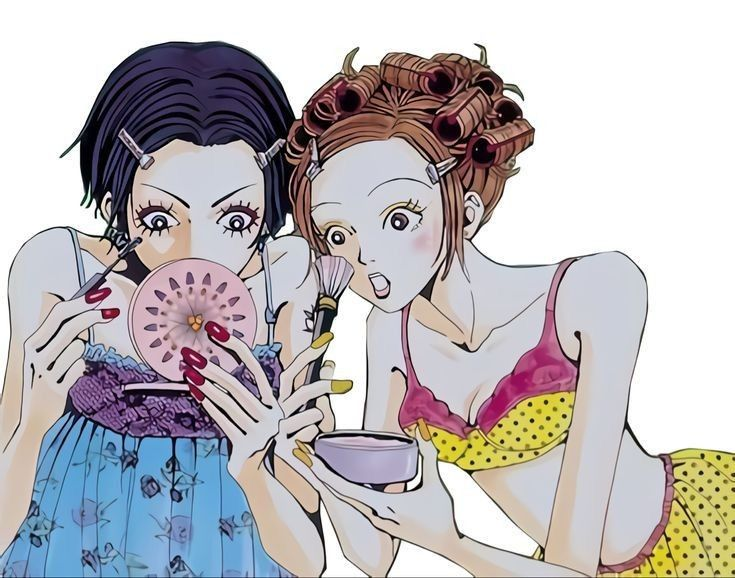
Nana Osaki and Nana Komatsu, nicknamed Hachi, collide on a train to Tokyo. One chases artistic independence through punk rock stardom; the other chases love, belonging, and the promise that adulthood will eventually feel safe. They share a name, an apartment, and a fragile intimacy that becomes the emotional spine of the series.
What follows is not a romance in the traditional sense, but a coming-of-age autopsy. Betrayals, dependency, ambition, self-sabotage, and longing bleed into each other as friendships strain and adulthood demands payment. The story refuses to comfort you. Instead, it asks you to sit with the consequences.
A Mirror for Your Twenties
Popular culture often sells your twenties as a highlight reel: freedom, fun, glow-ups, “finding yourself.” Nana calls that bluff. It shows the isolation of moving somewhere new, the panic of realizing love does not equal safety, the humiliation of wanting too much, and the quiet terror of not wanting enough.
Hachi’s yearning, messy, obsessive, painfully sincere, contrasts with Nana O.’s pride and self-imposed solitude. Neither is “right.” Both are human. At 15, you might judge them. At 30, you understand them. Eventually, you stop picking sides because you recognize yourself in all of them. That’s the genius: there is at least one thing to dislike about almost every character, and that’s precisely why they feel real.
Relationships as Emotional Education
If Nana taught a generation anything, is is emotional literacy through discomfort. Very few relationships in the series are healthy; most are believable. The show doesn’t glamorize toxicity, but it does not sanitize it either. It lets you watch jealousy rot intimacy, watch comfort masquerade as love, and watch ambition clash with devotion.
This is why Nana feels like a crash course in boundaries. It does not preach. It demonstrates. You learn what to run from, what to grieve, and what to forgive, not because the story tells you to, but because you feel it.
Punk, Fashion, and the Freedom to Be Seen
For many viewers, Nana is also an awakening. Punk culture in the series is not an aesthetic, it’s an ethic. Leather jackets, engineer boots, ripped denim, chains: they aren’t costumes; they’re armor. Punk here means rejecting prescribed normalcy, refusing to be palatable, and choosing authenticity even when it isolates you.
The influence of Vivienne Westwood, woven seamlessly into the narrative, cements this rebellion. Clothing becomes identity, not performance. You stop caring how others dress or judge you, because you finally understand that everyone is just trying to define themselves in a world that keeps rewriting the rules.

Lessons to Learn from Nana
1. Love Alone Is Not Enough
One of Nana’s most devastating truths is that love does not automatically mean longevity. You can love someone deeply, purely, desperately, and still lose them. Pride, fear, timing, and emotional immaturity can fracture even the strongest bonds. Nana Osaki’s instinct to push people away before they can leave her is painfully relatable, and painfully human. The series teaches that sometimes damage accumulates quietly, and by the time you realize it, love is no longer enough to bridge the gap.
2. People Leave, and That Isn’t Always a Failure
Nana dismantles the idea that the most important people in your life are meant to stay forever. College friendships drift. Soulmate-level connections dissolve. Sometimes no one is at fault. Sometimes both people are. Learning to grieve relationships without villainizing them is one of the most adult lessons the series offers. Some people are meant to shape you, not stay with you.
3. Pride Can Be Just as Destructive as Neediness
Hachi’s vulnerability is obvious, but Nana O.’s pride is more insidious. Her need for independence, her refusal to ask for help, and her fear of emotional reliance all read as strength, until they aren’t. Nana shows that emotional self-sufficiency can quietly turn into isolation. Wanting to be needed is not weakness; refusing connection can be.
4. Don’t Build Your Life Around Someone Else’s Trajectory
Whether it’s moving cities, pausing dreams, or reshaping your future around a partner, Nana makes one thing clear: anchoring your entire life to another person’s path is dangerous. When that person leaves, or changes, you’re left unmoored. Independence isn’t about being alone; it’s about having something that remains when love falters.
5. Boundaries Are a Form of Self-Respect
Many characters in Nana tolerate treatment they know is wrong because they crave comfort, stability, or affection. The series quietly argues that boundaries aren’t walls, they’re lifelines. Learning when to say no, when to walk away, and when to choose yourself is framed not as empowerment rhetoric, but as survival.
6. Adulthood Is Lonelier Than We’re Prepared For
Nana strips away the fantasy of your twenties being a glittering peak. Instead, it shows adulthood as uncertain, isolating, and full of choices that hurt no matter which way you turn. That honesty is why so many viewers say Nana made them feel less alone. It doesn’t promise a happy ending, it promises recognition.
7. Loving Someone Is Never a Waste
Even with all the heartbreak, Nana never invalidates love. Every connection, no matter how it ends, matters. Loving deeply, even when it costs you, is not portrayed as foolish. It’s portrayed as human. The lesson isn’t to love less, it’s to love with awareness.

Why It Stays With You
You don’t finish Nana and simply move on from it. It lingers, shaping how you notice people, how you understand attachment, and how you recognize your own patterns in relationships. Its influence is subtle but persistent, woven into your tastes, your self-awareness, and the way you approach love, even when you fall short.
Revisiting it years later feels like returning to something familiar but changed. What once felt overwhelming becomes clearer; what you once judged becomes easier to understand. With time, the story offers less certainty and more empathy, not just for the characters, but for yourself.
The Quiet Truth
Nana is rare because it respects its audience. It trusts you to handle ambiguity, to sit with unresolved endings, to accept that not everyone heals neatly. It portrays young adulthood, especially young womanhood, with unflinching honesty: loneliness, attachment, ambition, pride, self-destruction, and resilience tangled together. There may be no other anime quite like it.
If you’re a young adult wondering why everything feels heavier than you expected, or older and finally understanding why it did, Nana isn’t just recommended. It’s essential.
© 2026 alexiacretoiu


Insanely good read Lexi!!
BANG