When Music Becomes a Mirror

Updated: Jan 30
By Alexia Cretoiu
December 17, 2025

Music is the most silent architect in our lives. It does not shout directions or hand us blueprints. Instead, it slips into our ears as nothing more than tiny vibrations, air moving at precise frequencies, and yet our brains treat it like revelation. In milliseconds, those vibrations become meaning, emotion, memory. Every beat and every chord is decoded faster than any machine could dream of: the limbic system lights up, dopamine flickers, and suddenly we’re transported back to a childhood bedroom, a summer night, a heartbreak, or a moment that shaped us. Music does not just soundtrack our lives; it quietly sculpts them. It is a mirror, a tuning fork, a compass. The frequencies we gravitate toward often reflect the frequencies within us.
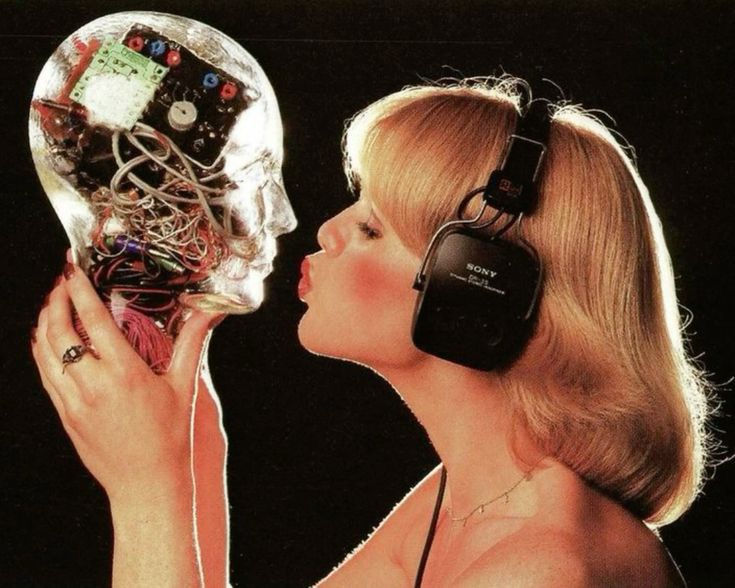
Before we even decide what a song “means,” our bodies have already reacted. Club music, with its deep sub-bass, settles low, hitting the root and sacral parts of the body. It doesn’t just vibrate a room, it vibrates you. Your heartbeat syncs. Your hips loosen. It feels instinctual, almost primal, as if your body remembers something before your mind does. Folky pop and acoustic ballads rise higher, landing in the heart space, carried by guitars, pianos, and raw voices. These sounds feel warm, intimate, sincere; they pull softness out of you. Meanwhile, hyperpop and futuristic alternative music climb into high frequencies that scratch the edges of your brain like digital glitter. Its overstimulation turned into euphoria, a sensory overload that somehow becomes clarity. Sound travels through us like light through stained glass; different parts glow depending on the frequency. It’s why music can feel therapeutic, disorienting, grounding, or electrifying. Music is not decoration. Music is neurological. Music is embodied.

In today’s culture, no one is “just listening” anymore. Music has become performance, an identity you curate. Micro-genres have become cultural currency, and people often adopt the costumes of these sounds to visually belong to the worlds their playlists promise, as if the sound itself shapes the way they choose to be seen. These aesthetics don’t stay in headphones; they begin to shape outfits and self-concept. What starts as expression slowly becomes expectation, as the costume begins to overshadow the emotional frequency beneath the music itself. At some point, the question shifts from what moves you to what version of you fits the sound, and feeling is replaced by strategy. The music becomes less about resonance and more about display.

This shift has created a strange kind of pressure, where listening no longer feels private, but performative. What once lived quietly in headphones has become something that must be proven outwardly, visually. There’s a fascinating tension in music culture today: people often feel obligated to “dress the part” to listen. If you love Lana Del Rey, there’s pressure to become the soft-girl, the coquette archetype. If you’re drawn to Opium’s industrial distortion, the record label home to artists like Playboi Carti and Ken Carson, you’re expected to embody a mysterious, black-dipped aesthetic. If you’re into Charli XCX and the “brat” aesthetic, people often assume you live in a constant state of hyper-social, high-energy chaos. Music taste has shifted from something private to something performative, no longer just what you listen to, but what you’re expected to be, as if every playlist comes with a costume and a script you’re supposed to follow. While these aesthetics can be fun, expressive, or cathartic, they can also disguise something much more essential, your true connection to sound. Because music doesn’t care how you look. Music only cares how you feel.
Authenticity in music isn’t about visuals, outfits, or shaping your identity around a playlist. It’s about what the sound stirs in you, emotionally, mentally, quietly. Opium’s distortion can feel grounding if you’re drawn to darker, sharper textures. Lana’s melancholy can speak to people who carry a certain softness or nostalgia. Hyperpop can feel energizing and bright when your mind needs movement. Folky pop can create a sense of calm you don’t always get elsewhere. Your relationship with music is internal before it’s anything aesthetic. It doesn’t ask you to fit a look or persona, it just asks you to listen and let it meet you where you are.

At its core, music is a mirror, a looking glass into the soft machinery of your soul. When you strip away the costumes, the trends, and the curated identities, you’re left with the purest thing: a body responding to vibration, a brain turning sound into meaning, and a self being revealed, not created, through the frequencies you choose.
© 2025 alexiacretoiu


Comments